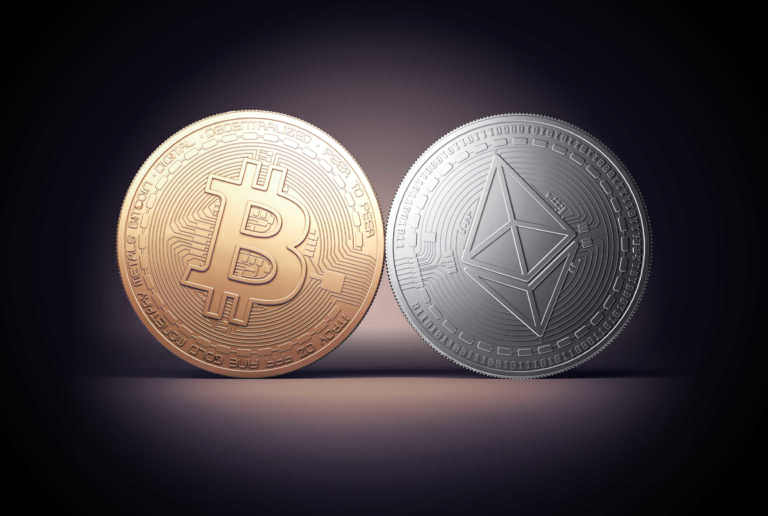
Cryptocurrency Advantages
Cryptocurrencies offer several advantages when compared with
traditional banking, money transfers, and fiat currencies.
-
Privacy. Many cryptocurrencies are designed
with privacy in mind and obscure the identity of the
sender and receiver of cryptocurrency funds. Only cash
provides similar anonymity.
-
Decentralization. Cryptocurrency owners use a
wallet to access their currency and receive or send
funds from a specific wallet address that uses a secret
key for access. Some also use an exchange to store
currency, although the practice brings additional risk.
The record of the currency exists on the blockchain with
a copy stored on every full node, a computer that keeps
a ledger locally and syncs with other computers online.
Your money isn’t in a single bank, or even several. The
decentralized nature of cryptocurrency ledgers makes
cryptocurrencies less vulnerable to seizure or localized
risks, like fires or hardware failures. The data isn’t
just stored off-site, it’s copied worldwide to all full
nodes.
-
Scarcity. Bitcoin has a fixed supply. Over 17
million Bitcoin are in existence. However, only 21
million Bitcoin will ever exist. It’s built into the
code for the currency. The fixed supply gives Bitcoin
and other cryptocurrencies similar characteristics to
gold, silver, or other precious metals that have
historically been used as money. Unlike U.S. Dollars,
British Pounds or any other fiat currency, after the
full supply is in circulation, the supply will never
grow, devaluing the currency’s buying power.
-
Smart contracts. Some cryptocurrencies have a
unique feature that can’t be duplicated with fiat
currencies. Ethereum is among the best examples with its
robust support for “smart contracts”, essentially
programs that live on the blockchain and can be used to
manage transactions as well as many other uses, some of
which we may not have yet imagined. At a base level,
these contracts can be used to replace arbiters or
escrow services. The smart contract can manage the
details of a transaction, only releasing payment when
predefined conditions are met.
-
Cost of transfers. The cost associated with
cryptocurrency transfers can be a pro or a con,
depending on the type of currency, the type of transfer,
and the speed of the transfer. Bitcoin, for example, can
become prohibitively expensive if you need fast
clearance for a transaction. Costs are less problematic
for less time-sensitive transactions. Other types of
cryptocurrencies, such as Ripple, are fast and
inexpensive to transfer, leading to increased adoption
of Ripple-based transactions and related technology by
financial institutions.
Cryptocurrency Disadvantages
Cryptocurrencies come with a list of considerations that can
help investors make safer investments. It’s fair to say that
there is no safe cryptocurrency at this early stage, but
with careful planning, you can assemble a portfolio that
limits your risk while still providing you the opportunity
to exit the trade if needed.
-
Market adoption. Awareness for Cryptocurrencies
is growing, but most of the focus has been on Bitcoin.
Relatively few retailers accept cryptocurrencies for
payment, but there are a few. Overstock.com announced in
2017 that they would accept cryptocurrencies as payment.
Payments will be limited to Bitcoin, Ethereum, Litecoin,
Dash, and Monero, giving the other 1,500+
cryptocurrencies the cold shoulder. SCCC trades in over 50 cryptocurrencies, allowing cryptocurrency owners
to buy pizza from local establishments and have it
delivered. Market adoption of cryptocurrencies for
payment has been slow and options continue to be limited
but the cryptocurrency market can change quickly.
-
Obsolescence. As many as 1,000 cryptocurrencies
have failed already, with more currencies sure to
follow. The most common type of failure is at the
Initial Coin Offering (ICO) or shortly thereafter, with
many coins finding a crowded market for coins with
similar characteristics to existing offerings, causing
skepticism among investors. In some other cases, the ICO
itself was just a cash grab, with the founders running
off with investor funds. Currently, ICOs are
unregulated.
-
Abandoned cryptocurrency projects. Most of the
investment money for cryptocurrencies is focused on a
relatively small group of coins. Without investor
interest, projects can get abandoned, leaving investors
with essentially worthless digital coins.
-
Regulation risk. As it pertains to
cryptocurrencies, regulation risk has two sides. In the
U.S., cryptocurrencies are not regulated at a federal
level, leaving states the option to introduce rules and
regulations regarding cryptocurrencies or the blockchain
technology that serves as the backbone for
cryptocurrencies. On the other hand, some investors and
finance experts have expressed concern over future
regulation for cryptocurrencies, which could cause a
drop in demand or eliminate demand altogether.
-
Liquidity risk. Investors and lesser-known
cryptocurrencies may find fewer buyers, creating
challenges when looking to exit a position.
-
Volatility risk. Few investment classes can
rival cryptocurrencies when it comes to price
volatility. Prices can rise or fall dramatically in a
single day, making or breaking fortunes.
-
3rd-party risk. Mt. Gox, a Bitcoin exchange
based in Japan, and the leading exchange worldwide in
2014 was hacked, leading to a loss of nearly half a
billion dollars in Bitcoin. In total, an estimated
850,000 Bitcoins belonging to investors went missing,
ultimately forcing the exchange into bankruptcy.
-
Secure keys. Cryptocurrencies are often kept in
a digital walletwhich is secured by a long code or a
long series of words. Unlike your bank account or
investment account, there is no recovery process
available if you lose your password. Without your
password, your cryptocurrency wallet and its contents
are no longer accessible.
Features of the Best Cryptocurrency
Weiss Ratings, a leading independent rating agency for
financial institutions, recently introduced ratings for
cryptocurrencies, identifying Bitcoin, Ripple, EOS, NEO, and
Steem as its five top-rated cryptocurrencies. Weiss also
spotlights a dozen cryptocurrencies it identifies
as being the weakest.
|